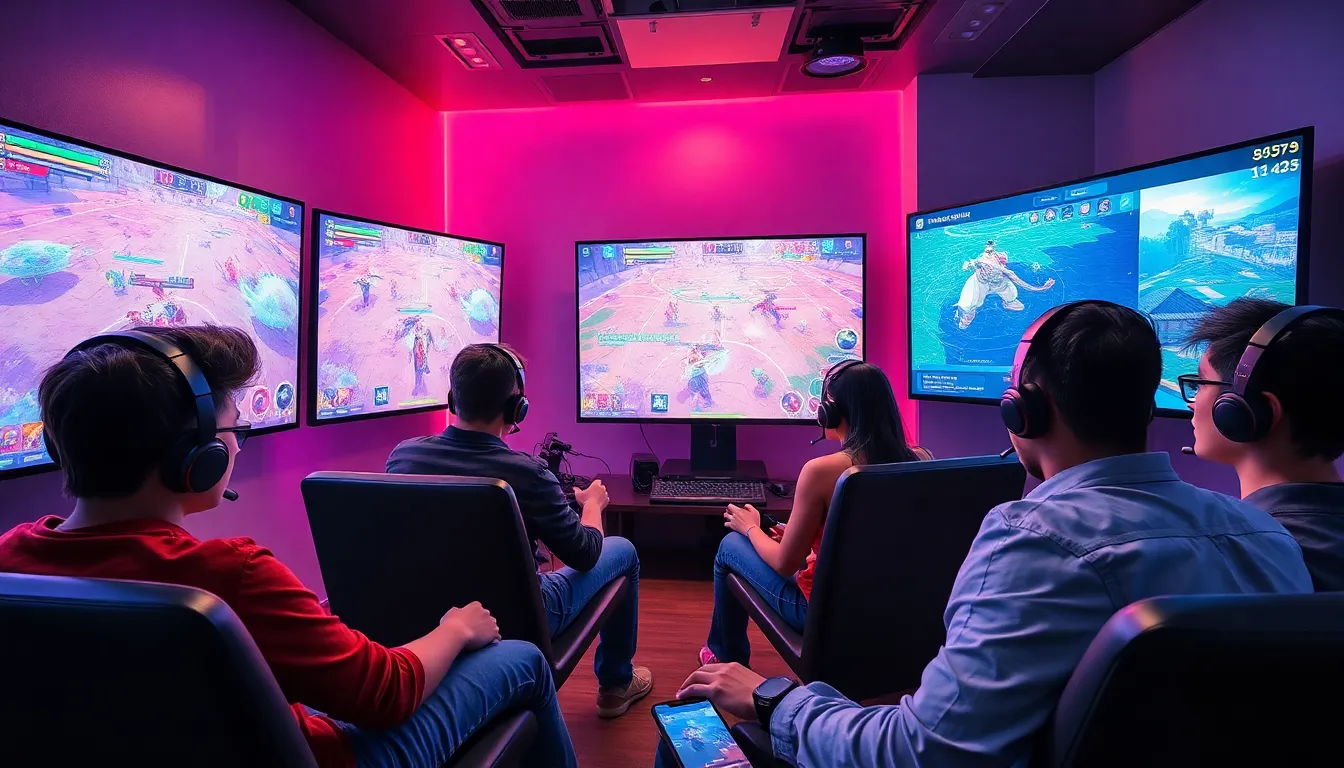
In the ever-changing environment of 2026, the distinctions between digital and physical experiences have been largely erased. We are not restricted by the gadgets we own, but by the connectivity we have to the primary sources. For a long time, the gaming industry was the last frontier of remote access.
While the office applications and static files could be controlled remotely, the demands of the latest gaming titles required the use of local hardware that was high-end and reliable. However, a major technological shift has taken place, and remote gaming on desktops is emerging as an effective and frequently better option than the traditional setup on local.
This change isn’t just the result of a need for people who are traveling; it will fundamentally alter the way we view computing power. In separating the processing unit from the monitor, creative professionals are discovering new levels of efficiency and freedom.
The Technology Architecture of seamless streaming
To understand the reason this shift is taking place now, it is necessary to look at the technology behind it. The remote desktop protocol was developed for tasks with low bandwidth,h where latency was considered an afterthought. Playing a fast-paced shooter with the traditional RDP was a cause for frustration. The “input lag”–the time between the player’s action and the feedback that appears on screen — was just too long.
Modern technologies have changed the story. Utilizing peer-to-peer (P2P) architecture as well as advanced video codecs, such as H.265, AV1, and H.265 and H.26,5, today’s devices can deliver 4K video at 144 Hz, with the speed of light that is almost invisible to the naked eye. This isan “performance-first” method of thinking that considers every second as an essential resource. If a user chooses to download StarDesk remote, it is accessing an environment specifically tailored for high-demand situations. The software is geared towards “Human Interface Device” (HID) information to ensure that the mouse’s movements and inputs are transferred with precision.
Remote Desktop vs. the “Cloud Gaming” Bottleneck
There is a widespread misconception about remote desktop gaming as being associated with cloud-based gaming. However, they’re distinct from each other. Cloud gaming is based on shared servers run by a third-party provider. This can result in the appearance of a “one size that fits all” experience in which you are limited to a particular collection of games, prohibited from using mods, and subject to performance variations depending on the server’s traffic.
Gaming on remote desktops, in contrast,t is a private cloud. It is streaming on your personal computer. This has three distinct advantages:
1. Absolute Sovereignty Over Your Library
If you stream games from your personal computer, there is no restriction on license agreements between game developers and cloud service providers. If a game is stored on your hard drive – whether it’s an enormous AAA title,r an emulated classic, or an RPG that has been heavily modified-, it can be played. You control the settings for your graphics, save files, and the UI you have customized.
2. Dedicated hardware performance
Cloud gaming is often “virtualized,” meaning you benefit from one high-end GPU with a number of other gamers. When you play on a remote desktop, your personal computer is dedicated exclusively to the game you’re playing. There is no competition with other users, which means better bitrates, steady frame speeds, as well as the capacity to use specific hardware features, such as DLSS 3.5 or specific Ray Tracing cores that you’ve already put money into.
3. Effectiveness of Cost in the Long Run
Subscription costs for premium cloud gaming could add up to hundreds per year. Using the equipment that you already own eliminates the need to pay another monthly fee. This is basically changing your $2,000 gaming laptop into a worldwide server that you can access with a $300 tablet or an office laptop five years old.
The role of low latency in competitive Environments
For those who play, the issue of latency competitively isn’t only a technical measure; it’s the difference between winning and losing. The psychological effect of lag has been well documented. It disrupts”the “flow status and forces players to take on the interface, not the player.
The most recent advancements in remote software use “ZeroSync” technology that allows you to keep the total latency of the system–the period between input and screen updates–under 30 milliseconds. At this time, the brain interprets the interactions as immediate. This has opened the way to remote gaming as well as competitive ladder climbing and high-stakes raiding within MMOs,s and all the while being far from the office.
Practical Tipforto the Ultimate Setup
To have a top-quality remote gaming requires a well-balanced strategy for your networking. While the software is doing all the work, your infrastructure should be supportive.
- Hosting Connections: The primary PC should be connected to a Gigabit Ethernet. The speed of upload is the main element here. A steady 20-50 Mbps upload speed is suggested for 4K high-definition streaming.
- It’s the Client’s device: At the receiving side, Wi-Fi 6 or a 5G cellular connection will provide the stability needed. Modern remote tools are smart enough to change bitrates at a moment’s notice and prevent “stutter” even when the signal drops for a moment.
- Peripherals: The majority of top remotes now provide complete compatibility with Bluetooth controllers, allowing users to turn their mobile phone and iPad into a console for their portable without difficulty.
Secure inan Hyper-Connected Universe
It is impossible to discuss remote access without considering security. The ability to access your home or office PC via public networks can be risky if it is not managed properly. The most popular solutions today use end-to-end encryption (AES-256) and DTLS protocols to ensure that your video stream, as well as input data, is not visible to anyone else’s eyes. Additionally Multi-factor authentication (MFA) guarantees that only you can “wake” and connect to the host system.
Final Conclusion: The Liberation of the Gamer
The direction of technology is evident that we are heading towardsae world which is “compute-on-demand.” Its physical place on a graphics card is rapidly disappearing. If you’re a professional looking for a method to test game designs in the field or a gamer looking to finish an entire campaign on lunch breaks, the tools are available to help bring that dream to life.
When you integrate a powerful remote tool into your routine, it is a way to ensure the future of your entertainment. You’re no longer held by cables or restricted to only one space. You can use the power everywhere there’s a display andae signal.