Choosing the right bare copper lugs is essential for building safe and efficient electrical connections, especially in high-current systems. These connectors are widely used in battery cables, inverters, grounding systems, solar installations, and industrial wiring because copper offers excellent electrical conductivity and mechanical strength. In many heavy-current applications, they are also commonly used as heavy duty battery lugs, a term often used for the same type of connector in battery and power systems.
Selecting the correct lug involves more than matching a cable size. Several technical and application-specific factors should be considered to ensure long-term reliability.
Understanding Bare Copper Lugs
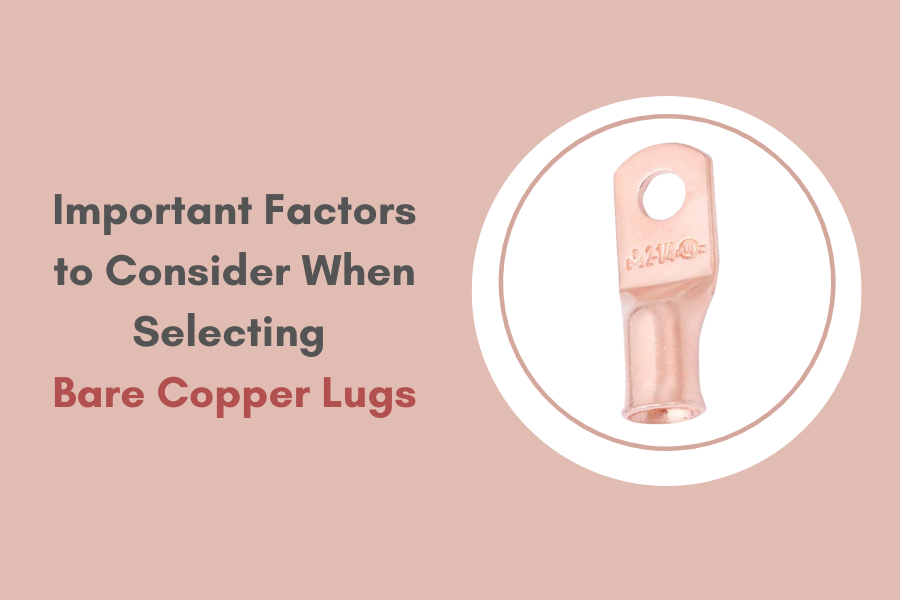
Bare copper lugs are uncoated copper terminals designed to terminate stranded copper cables to a stud, busbar, battery post, or grounding point. Unlike tinned versions, these lugs do not include a corrosion-resistant coating, which makes them best suited for dry indoor environments or installations where external insulation such as heat shrink tubing will be used.
They are widely preferred for applications requiring low resistance and efficient current flow.
Match the Lug to Cable Size
The most important factor is cable compatibility.
The barrel size of the lug must precisely match the conductor size, whether specified in AWG or square millimeters. An undersized lug may damage wire strands during insertion, while an oversized lug can result in a weak crimp and increased resistance.
For example, if you are working with 4 AWG cable, the lug barrel must be specifically designed for 4 gauge wire. Proper sizing helps maintain a strong mechanical bond and reduces the risk of overheating.
Check the Stud Hole Size
The ring or palm hole of the lug must fit the terminal bolt or stud correctly.
Common sizes include:
- 1/4 inch
- 5/16 inch
- 3/8 inch
- M6 or M8 metric studs
A hole that is too large may lead to unstable contact, while a smaller one may not fit the terminal at all.
This factor is especially important in heavy duty battery lugs, where secure fastening is necessary to handle vibration and high current loads.
Consider Current Load and Application
Current-carrying capacity is another critical factor.
Bare copper lugs are often used in systems such as:
- Battery banks
- Inverter cables
- Solar power systems
- Automotive power wiring
- Industrial control panels
Higher current systems generate more heat, so the lug must be capable of carrying the intended load without excessive resistance.
For high-current setups, longer barrel or heavy-wall lugs are commonly preferred because they provide stronger crimp retention and better heat dissipation.
Installation Environment
Since bare copper is uncoated, it is more prone to oxidation when exposed to moisture or corrosive environments.
This makes bare copper lugs most suitable for:
- Indoor electrical panels
- Dry battery compartments
- Enclosed machinery systems
- Protected control cabinets
For outdoor or marine use, tinned copper lugs are generally a better choice due to improved corrosion resistance.
Crimping Compatibility
The selected lug should be compatible with the crimping tool available for installation.
Heavy duty battery lugs typically require:
- Hydraulic crimpers
- Hex crimp tools
- Indentation crimpers
Using the correct die size is essential to achieve a low-resistance connection. Poor crimping can create loose contact points that generate heat and voltage drop.
Material Quality
Not all copper lugs are manufactured to the same standard.
High-quality lugs are generally made from electrolytic copper with high purity for optimal conductivity. Seamless barrel construction is often preferred because it improves strength and crimp reliability.
This becomes especially important in systems with frequent vibration or heavy electrical loads.
Conclusion
Selecting the right bare copper lugs requires careful attention to cable size, stud hole dimensions, current load, installation environment, and crimping requirements. In battery and power systems, where these are often used as heavy duty battery lugs, proper selection directly impacts safety, efficiency, and connection durability.
By choosing the correct specifications for the intended application, electrical systems can achieve reliable long-term performance with minimal resistance and reduced risk of failure.